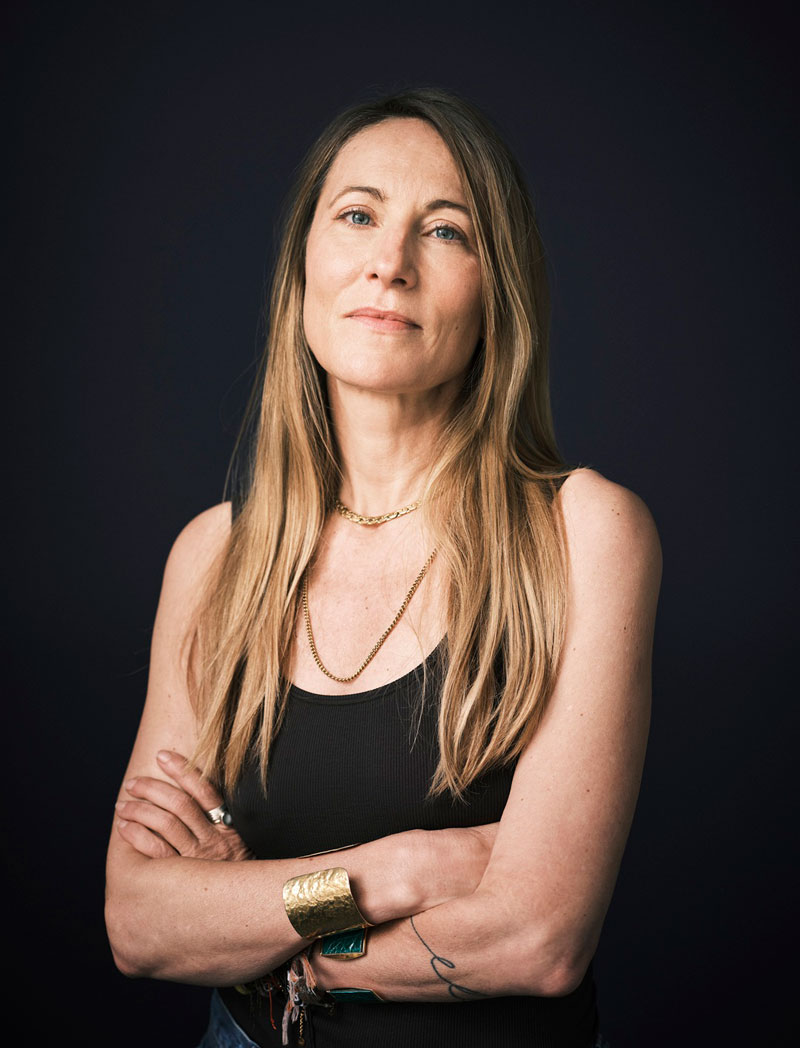
French Photojournalist Véronique de Viguerie Wins ‘HIPA Photographer of the Year’ Award
French photojournalist Véronique de Viguerie has been named ‘HIPA Photographer of the Year’ for the 15th season of the Hamdan Bin Mohammed Bin Rashid Al Maktoum International Photography Award (HIPA), in recognition of more than two decades of work documenting life in conflict zones and societies affected by war, oppression and political unrest.
From Afghanistan and Yemen to Iraq, Somalia, Nigeria, Syria and Mali, de Viguerie has built a career capturing the realities of communities living through conflict. Her work looks beyond the violence itself, revealing the humour, tenderness, beauty, absurdity and resilience that persist in everyday life, even in the most challenging circumstances.
His Excellency Ali Bin Thalith, Secretary General of HIPA said, “Véronique de Viguerie’s work demonstrates the depth and impact that can emerge from a sustained commitment to photojournalism. Her distinctive perspective brings audiences closer to the human realities of places and communities that are too often viewed through the narrow lens of conflict. Her career is a testament to the value of pursuing a clear vision with dedication and consistency, and to how such commitment can lead to meaningful achievements that leave a lasting mark on the global landscape of photography.”
Bin Thalith added: “Honouring creative talent lies at the heart of HIPA’s mission, inspired by the vision of His Highness Sheikh Hamdan Bin Mohammed Bin Rashid Al Maktoum, Crown Prince of Dubai, Deputy Prime Minister and Minister of Defence, and the Award’s patron. Through this vision, HIPA is committed to championing the arts, nurturing creative talent and supporting projects that make a meaningful, positive impact.”
The recognition carries particular significance for de Viguerie, who sees photography as a way to bridge geographical, cultural and human divides.
“This win is a great honour, and it carries profound significance for me. For over twenty years, photography has been my means of transcending geographical, cultural and human boundaries,” she said. “My lens has led me to places that are often misunderstood, viewed with suspicion and fear, or reduced to narrow, stereotypical portrayals.”
Reflecting on receiving the award, de Viguerie added: “As a European photographer, receiving this recognition from a prestigious Arab award is deeply moving; it serves as a reminder that photography is a universal language, one capable of building positive bridges that reach beyond borders and preconceived notions.”
De Viguerie added, “Throughout my career, I have always sought to look beyond the surface; beyond a simple black-and-white dichotomy, to reveal the colours, complexities and human dimensions that exist even in the darkest of places. The fact that HIPA has recognised this vision imbues this award with far greater value and meaning for me.”
The 15th season of HIPA is themed ‘Family’, inviting photographers to explore the connections, relationships and shared experiences that shape human life. The season’s winners will be honoured at a ceremony on Tuesday, 10 November 2026, at the Museum of the Future in Dubai.
The award reflects HIPA’s ongoing commitment to recognising photographic excellence and supporting visual storytelling that fosters cultural understanding and brings important human stories to international audiences.
About Véronique de Viguerie | France
French photojournalist whose work explores the grey zones of a world too often portrayed in black and white. For more than twenty years, she has worked in conflict zones and societies marked by war, repression and political upheaval, from Afghanistan to Yemen, Iraq, Somalia, Nigeria, Syria and Mali. Yet war itself is not her subject. What interests her is what survives within it: desire, humour, beauty, absurdity, tenderness, resistance and the rhythms of ordinary life.
Throughout her career, she has photographed places the outside world tends to understand through oppositions: victims and perpetrators, good and evil, freedom and oppression, us and them. Her work begins where these categories become insufficient. She is drawn to contradiction, ambiguity and the uncomfortable spaces in between.
Colour is fundamental to this approach. De Viguerie has deliberately worked in colour throughout her career, even in contexts traditionally represented through a darker, more austere visual language. For her, colour is neither decorative nor optimistic. It is a way of restoring complexity.
She does not photograph beauty in spite of war. She photographs beauty, desire, humour and colour because they, too, are part of war. To exclude them would be to create another kind of distortion.
This conviction has shaped her longstanding relationship with Afghanistan, which she first visited in 2003 and where she later lived for four years. She has returned repeatedly to document Taliban fighters, civilians, women, families and the profound transformation of Afghan society. Rather than reducing those she photographs to symbols—the victim, the enemy, the oppressed woman, the fighter—she seeks to preserve their contradictions and individuality.
Her work on women has become increasingly central to this vision. De Viguerie is particularly interested in women living within restrictive or violent systems who are too often represented solely through what is done to them. Her photographs instead explore what they do: how they negotiate, resist, love, organise, protect and reinvent themselves, sometimes claiming power in spaces from which they have long been excluded.
Her photographs have appeared in major international publications, including Paris Match, The New York Times, Stern, GEO, Le Figaro Magazine, Marie Claire and The Guardian. Her work has received numerous distinctions, including recognition from World Press Photo, the Canon Female Photojournalist Award, Bayeux Awards, and two Visa d’Or awards for her reporting from Yemen.
After more than two decades documenting conflict, Véronique de Viguerie’s work is ultimately not about violence. It is about resisting simplification. For her, photography is a way of putting faces back onto statistics, restoring humanity to those reduced to enemies or victims, and bringing colour back into stories the world has become accustomed to seeing in black and white.